
While Google Ads might be the go-to for lead generation, it’s shocking how many marketers are oblivious to the untapped potential of Meta Ads for expanding their reach.
Meta Ads (also known as Facebook Ads) offer various options suitable for different industries and ways to minimize junk leads, which are often a problem with this platform.
This article provides an introduction and advanced strategies for lead generation in Meta Ads.
Unleashing the Power of Lead Generation with Meta Ads
If you’re new to Meta Ads for lead generation, here’s an easy guide to get you started.
Embracing the Setup with Passion
When creating your campaign, it is essential to set the objective to Leads. This focus ensures that your advertising efforts are specifically designed to capture valuable contact information from potential customers. By prioritizing lead generation, you can effectively build a list of interested individuals who may be interested in your products or services.
At the ad set level, you’ll need to choose a conversion location. This selection is crucial as it determines where leads are captured and how the ad will behave across different platforms. The options you have may include lead forms directly within the platform, visits to your website where you might have a dedicated landing page, or even within specific apps. Each conversion location has its own benefits and considerations, so it’s important to analyze which one aligns best with your marketing strategy and target audience.
Using an integrated lead form can enhance the user experience by letting potential leads submit their information directly on the platform. Alternatively, sending users to your website may give them more detailed information about your offerings, encouraging conversions by prompting them to explore your content further. Carefully assess each option to improve your lead generation strategy. Your options include:
- Website.
- Website and calls.
- Instant forms.
- Calls.
Choosing the best conversion spot is important.
It impacts the ad format and makes sure your campaign is focused on generating leads, not just clicks or engagement.
Conversion location options and how they work with ads: The landscape of advertising has evolved, and so have the strategies to snag the attention of your audience. It’s no longer enough to just throw your message out there; you need to know exactly where to plant your flag. Conversion location options are your secret weapon in this high-stakes game. These targeted spots are where your ads can make or break your campaign, drawing in potential customers like moths to a flame. Mastering these options is not just an option—it’s a necessity. So, are you ready to take control of your ad game, or will you let your competition outsmart you?
- Website: Sends users to your website, where you can track lead actions like form submissions, demo requests, or appointments using the Meta Pixel.
- Website and calls: Sends users to your website, but includes a call button that triggers a phone number popup, allowing visitors to call directly from the site.
- Instant form: Opens a form directly within Facebook or Instagram – users never leave the platform. Submitted form data is emailed to you or pushed to your CRM if integrated.
- Messenger (Not recommended): This format starts a chat in Messenger or WhatsApp. It’s typically less effective for capturing qualified leads.
How do call ads work? Get ready to dive into the world of call ads, where your phone might just ring with potential customers eager for what you’ve got to offer. These ads don’t just sit there; they actively entice users to pick up the phone and connect with your business directly. Imagine the thrill of hearing that ring – it’s not just a call; it’s a lead, a chance, an opportunity! Are you brave enough to harness this tool and turn your marketing game on its head?
Call ads work in two primary ways:
- Direct dial: The ad dials a phone number immediately when clicked.
- Call add-on: The user is taken to your website, and a call button pops up at the bottom of the screen. This call interaction can be tracked by Meta.
Unleashing the Most Powerful Meta Ad Formats for Quality Leads!
The best Meta Ad format for lead generation depends on your business type and sales process, as different industries may resonate with varying ad styles and messaging. For example, businesses that prioritize visual content, such as those in fashion or design, might find that carousel ads showcasing multiple products perform exceptionally well. In contrast, service-based businesses might benefit from video ads that can effectively illustrate their offerings, creating a more relatable and personal connection with potential clients. Additionally, understanding the customer journey is crucial; employing lead forms directly within the ad can streamline the process for users, facilitating a smoother transition from interest to conversion. Therefore, a tailored approach that considers both the unique characteristics of your industry and the specific behaviors of your target audience will result in more effective lead generation.
Local Businesses: Why Call Ads are Your Secret Weapon for Instant Results!
For local businesses that rely on phone calls to close sales, such as medical clinics, salons, auto repair shops, or home services, call ads can drive a high volume of leads quickly. These ads are specifically designed to encourage direct phone calls, making them ideal for businesses that have a structured approach to handle a large number of daily inquiries efficiently.
Call ads serve as a powerful marketing tool, allowing these businesses to connect with potential customers in real-time. When a potential client sees a call ad and is prompted to call directly, it creates an immediate opportunity for the business to engage with them and address their needs. This immediacy can significantly increase the chances of converting leads into sales, as it enables personal interaction and allows businesses to establish trust more rapidly.
Additionally, call ads are most effective when a live person answers the phone. Businesses that route calls to voicemail or automated menus may lose out on valuable leads, as many potential customers prefer to speak directly with someone who can provide answers to their questions on the spot. Therefore, having trained staff ready to handle these calls is crucial. Not only does this approach enhance customer satisfaction, but it also helps businesses stand out in competitive markets where prompt and personal service is often a deciding factor for consumers.
Moreover, this strategy works exceptionally well for services that benefit from immediate communication with potential customers. For instance, when someone is looking for urgent auto repairs, they are likely to prefer speaking to a technician about their issue rather than navigating through a voicemail system. This immediate connection can lead to quicker decisions and, ultimately, a higher conversion rate for the business.
In summary, call ads are a strategic investment for local businesses that prioritize phone-based transactions. By ensuring that calls are answered by real people and equipping them to handle inquiries efficiently, these businesses can maximize their lead generation and improve overall customer satisfaction.
Embrace the Power of Forms for Complex Sales Processes!

Businesses with more complex sales cycles, such as B2B companies or higher-ticket B2C services, typically benefit more from using instant forms or website-based forms. These formats allow you to gather additional information upfront and provide a thorough pre-qualification of leads, facilitating a more streamlined sales process.
For example, B2B businesses often require more than a simple phone call to close a deal. The nature of these transactions generally involves a higher level of consideration and often multiple decision-makers. Therefore, a lead might need to schedule a demo, speak with a specialist, or share more detailed information regarding their specific needs and challenges. This additional context can be invaluable in framing the conversation for sales teams.
In these cases, inbound forms or scheduled appointments are more efficient and lead to higher quality conversations. By utilizing detailed forms, businesses can assess the suitability of potential clients before engaging in a conversation. This not only saves time for sales representatives but also ensures that meetings are productive and focused on the most promising opportunities.
Further, implementing these forms helps in building a database of qualified leads, which can be meticulously analyzed for trends and insights over time. By collecting nuanced data during the initial contact phase, such as industry type, company size, and specific pain points, sales teams can tailor their approach, aligning their offerings with the unique requirements of each prospect.
Moreover, this strategy fosters a more professional image. When prospective clients see that a company is thorough in its lead qualification process, it can enhance trust and credibility. In an era where customers are inundated with choices, providing a clear and structured interaction can significantly impact their decision-making process.
Ultimately, businesses looking to optimize their sales efforts in a competitive environment should consider the advantages of instant forms or website-based forms. By doing so, they can ensure that they are not just generating leads, but cultivating high-quality relationships that lead to successful conversions and ongoing partnerships.
Pick Your Poison: Which Business Type Will You Choose?
- B2B and complex B2C: Prefer forms for qualification and follow-up.
- Local B2C or service-based: Prefer Call Ads for faster lead flow and conversion.
- Hybrid: Use both formats and test based on how your team handles follow-up.
While instant forms may slow down leads for local businesses, they are still helpful for gathering lead data when the business is closed or when your team can’t answer calls.
Unleash Better Leads: Transform Your Meta Ads Madness!
While Meta has added more filters and tools over time, lead quality can still be an issue, especially with instant forms.
Fortunately, there are several ways to improve the quality of the leads you get from your Meta Ads.
1. Use longer instant forms
Short forms may generate more leads, but often at the cost of quality.
Adding more questions helps filter out unqualified users.
You can also connect the form directly to your CRM or have the leads emailed to you so you can review and track lead quality over time.
2. Add SMS verification
During instant form setup, enable the Require phone number confirmation via SMS option.
This extra step helps screen out fake or low-intent leads, improving the reliability of your contact data.
3. Direct leads to your website or landing page
Instead of using instant forms, consider sending users to your website to complete a form or make a call.
While this often leads to fewer submissions and a higher cost per lead, the leads are typically higher quality, especially for businesses with longer sales cycles or larger-ticket offerings.
To convert effectively, your landing page should include content that builds trust and answers key questions, such as:
- Comparison charts.
- Explainer videos.
- Lists of benefits.
- Testimonials or case studies.
This added information helps users feel confident enough to complete a form or call.
4. Import offline conversions
If you’re using a CRM or call tracking platform, you can import offline conversion data into Meta Ads.
This teaches the algorithm to find more leads like the ones that actually became customers, improving targeting over time.
5. Use call tracking for call ads
When running call ads, use third-party call tracking software (e.g., CallTrackingMetrics). This lets you:
- Record and review calls from Meta Ads.
- Send call data to your CRM.
- Evaluate lead quality and tag calls that turned into actual sales.
6. Enable follow-up messaging for instant forms
In the ad creation process, enable the Chat with leads checkbox.
After someone submits an instant form and agrees to messaging, this feature starts a conversation in Messenger or Instagram with their contact info included, allowing you to follow up in real time.
7. Connect your CRM for lead delivery
In the instant form setup, use the Lead Delivery option to send leads directly to your CRM.
You can do this:
- Via direct integration with Meta’s CRM partners.
- Use tools like Zapier to connect unsupported platforms.
This helps you respond faster and track lead outcomes more effectively.
Unleash Your Ads: Target the Hottest Audiences for Meta Lead Gen!

There are many effective audience options to consider when running lead generation campaigns on Meta Ads. Below are some of the best types to target.
Broad audience
For some businesses, especially local ones, simply targeting a service area or city without additional filters can work well.
This approach is ideal when your potential customer base is diverse and doesn’t need further narrowing.
Wide audience
This involves using minimal filters, such as targeting people interested in fitness for a fitness product.
Meta Ads no longer require highly detailed audience settings – one or two qualifiers are often enough to reach the right people.
Advantage+ audience
Similar to Google Ads’ Performance Max, Advantage+ uses a few signals (or none at all) to find and optimize audiences for you.
It’s best suited for larger companies with bigger budgets that can afford to test and learn at scale.
Lookalike audience
This option helps you find new people who are similar to your existing remarketing audiences, uploaded customer lists, or users who have engaged with your content or ads.
Remarketing audience
These work well for products or services with longer sales cycles, where multiple touchpoints are needed before conversion.
Engaged audience
You can also build custom audiences based on people who have interacted with your page, ads, or videos, such as those who liked, commented, shared, or clicked, regardless of whether they visited your website.
These can be created under Audiences > Custom Audience in Ads Manager.
When Should You Unleash Top vs. Bottom Funnel Campaigns for Meta Ads?
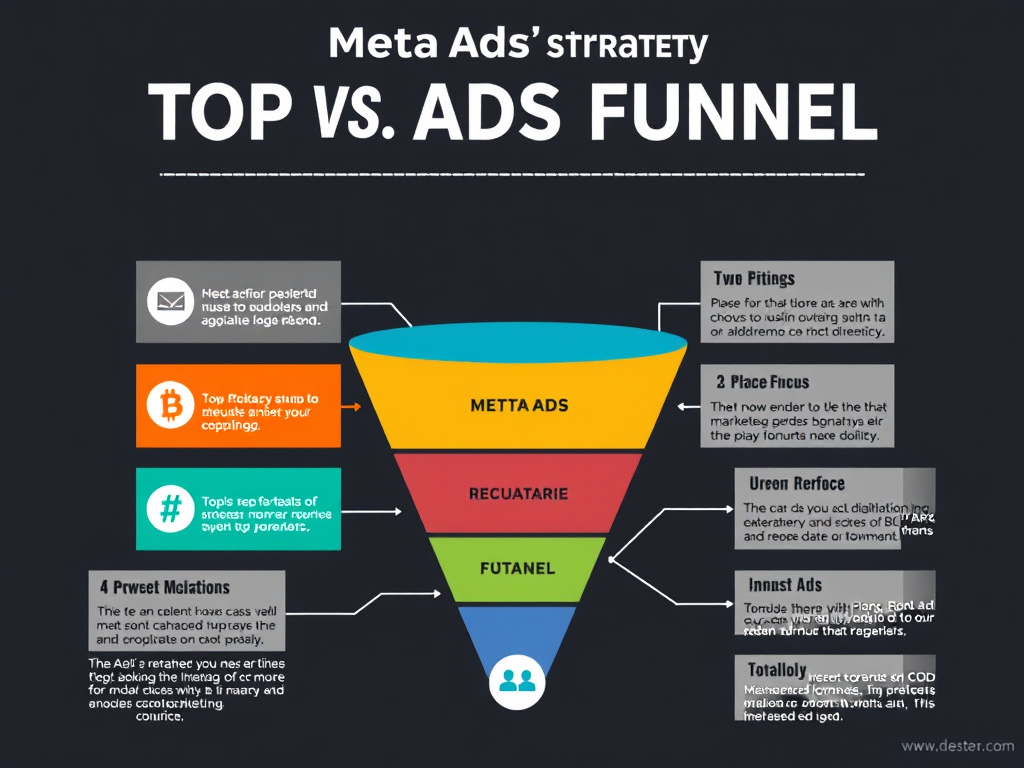
It depends on your product, service, and sales cycle.
If you’re working with a longer sales cycle or a higher-priced offering, your Meta Ads strategy will likely need to focus on nurturing leads rather than closing a sale immediately.
In contrast, for lower-cost products or services – or those that meet an urgent need – you can run ads designed to convert right away.
Top-of-funnel campaigns
These are ideal when you need to warm up your audience over time.
They typically require a longer follow-up process using funnel-building tools, CRMs, or email automation to guide leads through a series of touchpoints.
For example, an instant form ad might collect a user’s email address in exchange for a guide, video, or relevant tips.
From there, a series of follow-up emails gradually builds trust and eventually asks for a purchase or another conversion step.
Bottom-of-funnel campaigns
These are geared toward users who are ready to take action now.
The goal is to drive immediate conversions, such as a:
- Phone call.
- Form submission.
- Quote request.
- Appointment booking.
These ads are direct, with no extended nurture sequence.
This approach is common for local services, urgent needs like repairs, or straightforward offerings like consultations.
Unleash Explosive Growth with a Badass Meta Ads Lead Generation System!
Meta Ads offer powerful tools for lead generation, whether you’re targeting quick conversions or building a longer sales funnel.
By choosing the right ad formats, optimizing for lead quality, and aligning your strategy with your business type and sales process, you can turn Meta into a reliable and scalable lead source.
With the right setup and follow-up, Meta Ads can complement or even outperform traditional channels like Google Ads in many cases.
