
Unleash the Power of Content! Transform Comparison Pages into Magnetic Use Case Hubs. These hubs amplify AI Search Visibility. They are optimized for LLM Discovery!
AI search is evolving fast, but early patterns are emerging.
We’ve seen specific types of content consistently surface in LLM-driven results. These formats, when structured the right way, get picked up by models like ChatGPT. Gemini often cites and amplifies these formats. This showcases a growing trend. Certain content styles resonate well with AI-driven search mechanisms.
This article breaks down five content types gaining notable AI search visibility. Understanding these formats is crucial for businesses aiming to enhance their online presence. Their effectiveness often involves engaging storytelling. They also include relevant keywords and clear structuring. This aligns with how AI models process information.
To optimize these types for LLM discovery, it’s essential to consider both technical details and user experience. This involves crafting compelling content. It also requires ensuring that the content is easily accessible. Moreover, it should be formatted in a way that AI systems can understand and index effectively. By focusing on these principles, businesses can leverage the evolving landscape of AI search to their advantage. This focus ultimately drives more traffic and improves their visibility in an increasingly competitive digital environment.
Stay tuned as we delve deeper into each of these content types. We will explore specific strategies for implementation. We will also provide examples of successful applications in various industries.
- Comparison pages.
- Integration docs/open APIs.
- Use case hubs.
- Thought leadership on external platforms.
- Product docs with schema.
1. Why Comparison Pages Are Game Changers
Our analysis shows that Gemini frequently surfaces “X vs. Y” content in AI Overviews and AI Mode. This happens even when the query doesn’t ask explicitly for the comparison. It suggests a nuanced approach to content generation that anticipates user preferences. This tendency indicates that Gemini is designed to provide a richer understanding of topics. It offers a more comprehensive insight by presenting contrasting perspectives. This could enhance the user’s knowledge and decision-making process. Furthermore, this approach fosters engagement. It does so by encouraging users to explore the implications and nuances of differing viewpoints. These nuances may not have been initially apparent in their queries.
What to include
- Publish /vs/ pages with pros, cons, pricing, use case match, and schema.
- Do this for any competitors that bring in a decent volume of comparison queries. Also, consider any comparisons that are easily related to your product or service.
2. Unleashing the Power of Integration: Dive into Open APIs!
Our analysis has provided numerous instances of GPTs and Copilot citing SaaS APIs and dev docs in answers. This showcases how these advanced tools leverage the wealth of available documentation to enhance their responses. These AI models meticulously reference the most relevant APIs and development documentation. They can deliver accurate solutions tailored to specific user queries. This capability demonstrates the effectiveness of AI in understanding and utilizing technical resources. It also highlights the importance of well-structured documentation. Such documentation empowers developers and users alike to achieve their goals more efficiently.
Example
- A ChatGPT prompt for “setting up spam metrics for backend services” cited a docs page from Sentry. This page is from a performance monitoring company. It was mentioned in a list of best practices.
What to include
- Maintain clear documentation + changelogs with versioning and schema.
3. Are Your Use Case Hubs Totally Off Base?
We’ve seen clear indicators that AI Search prefers content tying features to real business problems. This emphasizes the importance of relevance and practical application in today’s digital landscape. By illustrating how specific functionalities solve genuine challenges faced by businesses, we can engage our audience more effectively. Our messaging will resonate on a deeper level. This strategic approach enhances visibility in search results. It also fosters trust and credibility with potential clients. They recognize our commitment to delivering solutions that truly matter.
Example
- Vanta’s SOC 2 compliance resource appears prominently in a ChatGPT answer to “SOC 2 compliance automation for startups.”
What to include
- Build intent-driven use case pages with testimonials and product mapping.
4. Challenging Conventional Wisdom: Thought Leadership Beyond Boundaries
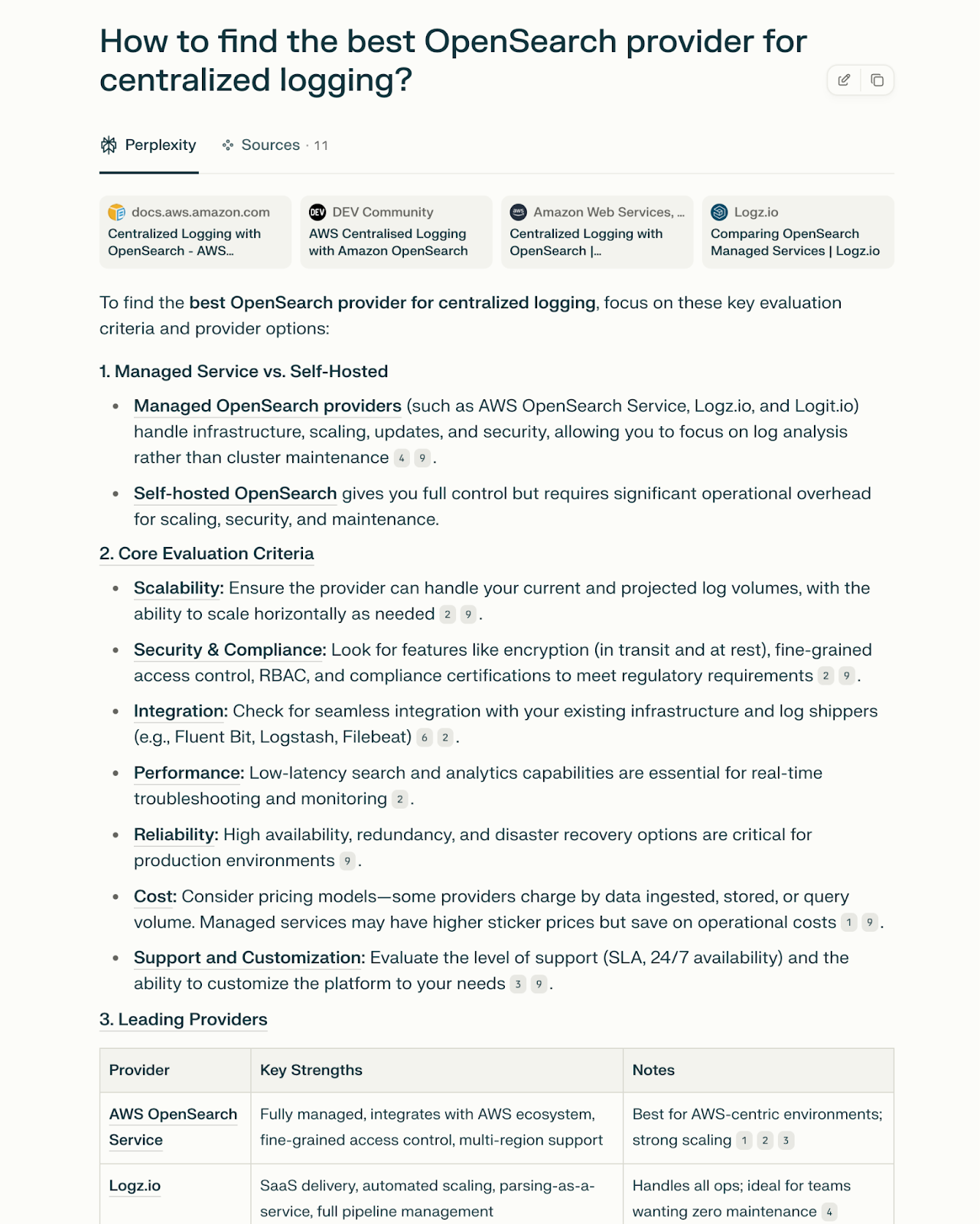
LLMs pick up posts from company experts, including founders, SMEs, and established thought leaders, on outlets like Medium and Dev.to for strategy-based questions.
Example
What to include
- Syndicate posts from a company founder, SME, or brand ambassador with a unique POV. Then, include a canonical link back to the business website.
5. Unlocking the Power of Product Docs with Schema!
Gemini AI Mode lifts from product docs if they’re structured with FAQs, How-to sections, and/or breadcrumb structured data.
3 Bold Recommendations You Can’t Ignore
You should never veer from the E-E-A-T principles that have long underpinned traditional SEO. Those same tenets will serve you well for LLM discovery, too.
Beyond them, however, there are a few LLM-specific steps to consider if your goal is to increase AI search visibility.
I’ll break down three key recommendations.
Unleash the Power of Multi-Modal Support Now!
AI search systems are increasingly retrieving and synthesizing multimodal content (think: images, charts, tables, videos) to better answer user queries.
Flex your content across multiple media types to provide more useful, scannable, and engaging answers for users.
Specific recommendations:
- Ensure images and videos remain crawlable for search and AI bots.
- Serve images via clean HTML and avoid lazy-loading with JavaScript-only rendering, since LLM-based scrapers may not render JavaScript-heavy elements.
- Images should use descriptive alt text that includes topic context.
- Add captions to images and videos with an explanation right below or beside the visual.
- Use
<figure>,<table>, etc., with contextually correct markup to help parse tables, figures, and lists. - Avoid images of tables. Use HTML tables instead for a machine-readable format supporting tokenization and summarization.
Make Chunk-Level Retrieval Work for You!
AI search engines don’t index or retrieve whole pages.
They break content into passages or “chunks” and retrieve the most relevant segments for synthesis.
Optimize each section like a standalone snippet.
Specific recommendations:
- Don’t rely on needing the whole page for context. Each chunk should be independently understandable.
- Keep passages semantically tight and self-contained.
- Focus on one idea per section: keep each passage tightly focused on a single concept.
- Use structured, accessible, and well-formatted HTML with clear subheadings (H2/H3) for every subtopic.
Unleash the Power of Answer Synthesis!
AI search engines synthesize multiple chunks from different sources into a coherent response.
Aim to make your content easy to extract and logically structured to fit into a multi-source answer.
Specific recommendations:
- Summarize complex ideas clearly, then expand (A clearly structured “Summary” or “Key takeaways”).
- Start answers with a direct, concise sentence.
- Favor a factual, non-promotional tone.
- Use structured data to help AI models better classify and extract structured answers.
- Use natural language Q&A format.
Dominate AI Search with Unforgettable B2B Content
An added benefit of these five content types is that they span multiple intent stages. They help you attract prospects and guide them through the funnel, ultimately leading to conversions and long-term relationships. By providing valuable information at each stage of the buyer’s journey, you engage potential customers. You also establish authority in your industry. This way, your content serves a dual purpose: educating your audience while positioning your brand as a trusted source.
Just as important is ensuring your AI search measurement systems are in place. Utilizing tools like Profound, Google Analytics (GA), and various forms of qualitative research are essential components of an effective strategy. These systems allow you to monitor and assess your content’s performance, enabling you to track impact over time. The insights gained from this data can inform future content creation. They can help refine your messaging. These insights optimize your marketing efforts to better align with your audience’s needs.
Additionally, staying tuned to reports and industry updates is crucial for maintaining relevance and effectiveness. The digital landscape is constantly evolving, and it’s vital to keep pace with new developments, trends, and best practices. Regularly reviewing industry publications and attending relevant webinars helps ensure your strategies remain cutting-edge. This way, your content continues to resonate with your target audience. This proactive approach will enhance your content marketing efforts. It will also enable you to adapt quickly to changes in consumer behavior and market dynamics.
