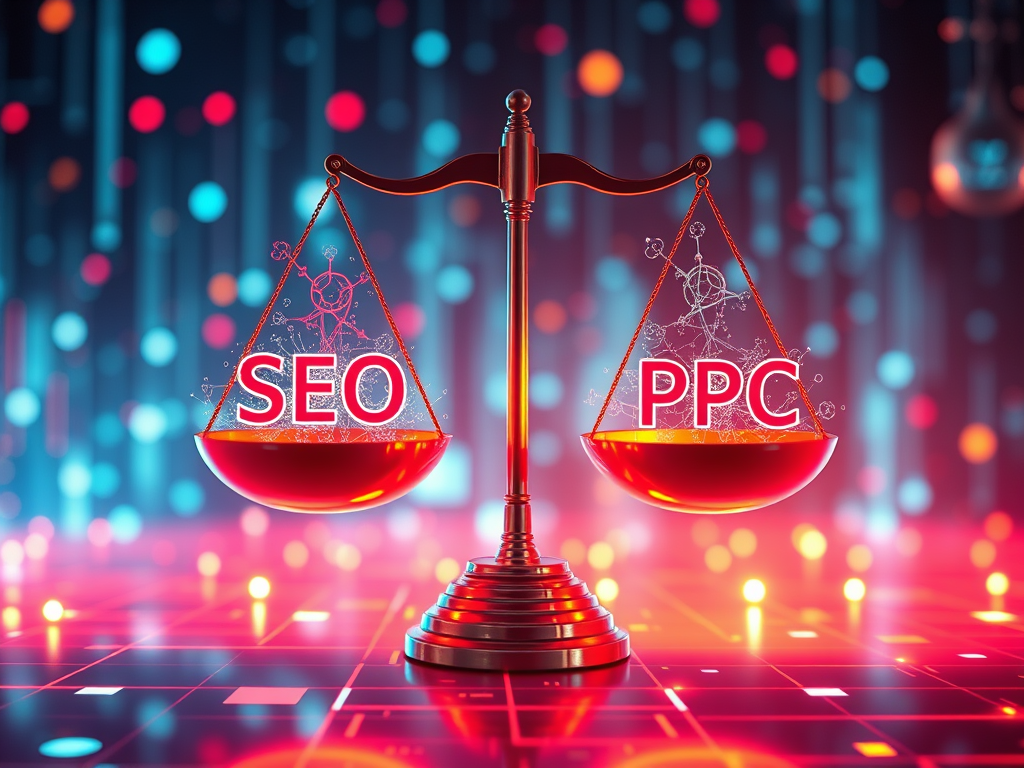
Embrace the Evolution: AI Joins SEO and PPC as a Powerhouse of Visibility! Discover the Shifting Landscape and Adapt to Thrive!
Marketers have debated SEO versus PPC for years. Their opinions are usually shaped by whatever has worked in the past. This leads to an ongoing discussion. It often feels circular. Their past failures also influence their views, reinforcing the idea that personal experience heavily dictates strategy.
Organic search offers compounding visibility over time. This can lead to sustainable traffic growth. It also helps build a more established online presence. It nurtures trust and credibility, key factors in building long-term customer relationships. On the other hand, paid search provides immediate control over ad visibility. It can quickly generate leads and sales. Advertisers can tailor their campaigns to specific demographics. They can adjust their approaches in real time based on performance metrics. This makes PPC an attractive option for those seeking quick results.
Most teams ultimately favor one over the other based on their experiences, budget constraints, or a survival instinct. Some may choose PPC because they have limited budgets for content creation. They may also feel a sense of urgency to capture market share. In contrast, others may champion SEO for its cost-effectiveness in the long run. They choose to invest in building quality content. They also optimize their sites for organic reach.
However, as we look ahead to 2026, this old debate no longer fits the reality of search. The landscape is evolving dramatically, with advancements in AI and machine learning fundamentally changing how users interact with search engines. Trends like voice search and local search optimization are emerging. There’s also a shifting focus towards user intent. As a result, the dichotomy between SEO and PPC is becoming less clear-cut. Marketers will need to adopt a more integrated approach. They must leverage the strengths of both strategies. This is necessary to stay competitive in an ever-changing digital ecosystem. Flexibility and adaptability are essential in this new era of search. By collaborating between SEO and PPC strategies, brands can achieve optimal results.
The Transformative Power of This Debate
The evolving search landscape has transformed the SEO vs. PPC debate to include AI and large language models (LLMs). Marketers face challenges due to increased fragmentation across channels and formats, creating a sense of overwhelm. To navigate this chaotic environment, you must integrate SEO, PPC, and AI strategies. This integration helps maintain visibility. It also enables you to adapt effectively.
The Fierce Battle: SEO vs. PPC
Traditionally, the choice between SEO and PPC came down to this:
- SEO: Long-term visibility, compounding returns, credibility, strong engagement, and “free” clicks (with heavy quotes). It matures slowly and comes with unrealistic goals, shady providers, and diminishing returns in a zero-click world.
- PPC: Immediate visibility, tighter control, and more precise measurement, but everything stops the moment the money does. Costs keep rising, competition is intense, and control and measurement keep shrinking.
My conclusion has always been the same: a joint approach works best.
- SEO builds demand.
- PPC harvests demand.
The two reinforce each other because they’re part of the same channel: search.
Most of that logic still holds but AI has added a third, unavoidable, and exciting layer.
AI: The Revolutionary Discovery Channel
AI is reshaping how people find, judge, and trust information.
Adoption is already strong in some groups, but this Christmas will be a tipping point.
Awareness is high. The tools are simple. AI is now integrated into the platforms people use every day, such as browsers, phones, and search engines.
Just as Google dominated search, AI will outgrow traditional search because it’s faster, easier, and better. It really is that simple.
We now live in a world where:
- Search engines summarise the web before anyone clicks.
- Chat assistants give direct answers without sending traffic anywhere.
- Product discovery starts in AI search, not Google.
- Users ask natural-language, multi-step questions that never existed before.
Visibility now depends on AI availability. The new brand battleground isn’t ranking but being surfaced inside AI systems.
SEO was the fight for rankings. PPC was the fight for placement. The AI layer is the fight for inclusion. It may overpower everything else.
No AI visibility means no chance. Maybe not today, but soon.
The challenge for marketers is simple and uncomfortable: there is no proven playbook for showing up in AI results.
You can’t buy your way in (yet).
You don’t “rank” in an LLM response.
You either are or you don’t.
Our fundamental goal has changed.
We’re no longer optimizing only for search engines.
We’re optimizing for discoverability within AI systems that still rely on search results for much of the information they deliver.
The Electrifying New Landscape of Visibility
AI is surprising, but in many ways, it was inevitable.
The modern web is exhausting.
We are searching, scrolling, streaming, and shopping. We chase answers across phones, search engines, and social platforms. Ads, shopping portals, pop-ups, CTAs, remarketing, email, and native ads create endless distractions.
Finding what you want has become a slog. You fight through marketing traps just to reach a simple recipe.
The amount of junk you wade through is excruciating.
AI cuts through that noise.
Ask the question, and you’ll get an answer.
It feels like fresh air. But is there a cost?
Tim Berners-Lee the original “web master” who essentially created the web – worries that AI will collapse the web. This will happen by draining the ad revenue that keeps it running. I agree.
In “Supremacy,” a book about the rise of today’s AI tools, the authors claim that Google had a ChatGPT-like model. This model was developed two years before ChatGPT launched. However, they held it back due to fears of lost ad revenue.
That’s easy to believe, and I agree.
Why? Because AI makes finding answers dramatically easier.
It will dominate because it’s simply better: less clutter, faster results, and easier refinement through conversation.
It’s a genuine leap forward for humanity.
Modern web marketing has become a battle of attrition.
Humans take the path of least resistance. We click the first few links and settle for whatever we find.
The old SEO joke makes the point:
Question: Where’s the best place to hide a body?
Answer: Page 2 of Google.
But AI doesn’t search like a human. It goes wide and deep.
The best answer is in Position 10 or on Page 2 (shockingly).
Dozens of searches, hundreds of results, technical docs, reviews, case studies pulled in and summarized in seconds.
It’s wonderful.
With hindsight, this shift feels inevitable.
The web has collapsed under its own entropy.
The extremes of advertising and commerce have degraded it. Now, getting anything done feels like navigating a war zone of desperate tactics.
Something had to give.
AI is the new order rising from the chaos of the modern web.
How This Transforms Your SEO/PPC Strategy Forever
AI has fundamentally changed the economics of both SEO and PPC.
1. SEO: It’s Not Just About Ranking—It’s About Being Renowned!
To show up in AI overviews, search summaries, or assistants, your content needs:
- Genuine authority.
- Clear topical clustering.
- Structured markup.
- Trust signals.
- Real depth, not surface-level fluff.
- Unique angles.
The unspoken truth: AI will skip thin content and favor original thinking and trusted perspectives.
2. PPC still owns the premium real estate
Even with the rise of AI summaries, PPC still dominates:
- Top-of-page slots.
- High-intent commercial queries.
- Visual shopping placements.
- Local packs with ad extensions.
- YouTube results.
- Discovery units.
- Merchant integrations.
AI has disrupted plenty, but it hasn’t changed Google’s need for revenue and that won’t shift anytime soon.
AI is making paid inventory even more prominent. This is helped by Google’s not-so-subtle tweaks. These tweaks make ads harder to distinguish from organic results.
3. AI Revolutionizes User Behavior Like Never Before!
AI creates a new pattern of behavior defined by:
- Fewer clicks.
- Shorter journeys.
- More single-answer moments.
- More comparisons done inside AI tools.
- Less patience for long funnels.
- More research before users ever reach your site and through different entry points.
- Higher expectations for personalized relevance.
SEO and PPC aren’t disappearing.
They may now sit in second place. They compete with a parallel discovery engine. This engine reshapes the user journey and entry points.
Is the Clash of SEO, PPC, and AI the Defining Debate of Our Era?
Most marketers still treat SEO, PPC, and AI as three competing channels. They’re not.
They’re three layers of the same visibility ecosystem:
- SEO builds presence and baseline visibility.
- PPC secures position and drives broad awareness.
- AI shapes discovery, context, and relevance.
Each layer feeds the others.
- SEO provides the content AI scrapes and summarizes.
- PPC builds top-of-funnel awareness and drives those early clicks.
- AI goes deep, compares everything about you and your competitors, and shapes how you show up in the conversation.
I began this article intending to answer the classic question: Which is better – SEO, PPC, or AI?
But as I worked through it, the answer became clear: in 2026, that’s the wrong question.
Broad guidance is always tricky, and every situation deserves context.
In the past, if you were a small local plumbing business, I have suggested starting with PPC. At the same time, you can build local SEO and focus on referral marketing.
Over time, you dial PPC back and rely on SEO, with ads ready if leads slowed.
Alternatively, if you were a college with a complicated, messy site but strong authority, you stop running ads. This is possible only if you properly plan, rebuild, and improve the site.
But now we have a third ingredient: SEO, PPC, and AI.
At this point, you can’t separate SEO from AI.
AEO, GEO whatever label you prefer they’re intertwined.
You must understand how AI and SEO connect through retrieval-augmented generation (RAG). Otherwise, you’ll struggle in a zero-click world. People expect direct answers instantly.
PPC is different. It isn’t connected to AI in the same way yet. But that won’t last. Google is already folding ads into AI Overviews.
Optimizing for AI is an extension of optimizing for SEO.
It’s still early. We don’t even agree on a name. It’s clear that figuring out how to improve for AI will be a major focus. SEOs and GEOs will concentrate on this over the next year.
What I know for sure: you can’t afford to freeze.
We do not have the full map. Still, we know enough to start. There’s plenty you can do to improve for AI right now.
Ignite Your Visibility: Mastering SEO, PPC, and AI Together!
The strategy for 2026 isn’t just about “ranking.” It’s about “being cited.”
To survive the visibility squeeze, you need to enhance for the machines. These machines read your content before humans ever see it.
1. Embrace the Power of GEO!
Structure your content for AI retrieval.
LLMs prefer short, direct answers two to three sentences at the top followed by detailed context.
Use clear logic, bullet points, and data tables that AI can easily parse and surface in overviews.
2. Ignite the Knowledge Graph with Powerful Entity SEO
AI verifies facts through entities people, brands, and concepts.
Your About page, schema markup, and author bios must be airtight.
If Google doesn’t understand who you are, it won’t cite you as an authority.
3. Ignite Your Efforts to Close Citation Gaps!
AI models favor information from trusted sources: wikis, major publishers, and niche authorities.
Shift your digital PR from “getting links” to “getting mentioned” on the sites AI already trusts and references.
4. Embrace the Power of Freshness and Data!
LLMs lean toward recent information. Update stats, timestamps, and comparisons regularly.
Static evergreen content often loses out to content that proves it’s current.
Embrace Redundancy: The Power of the Hybrid Approach
No single channel will carry you.
Pay for immediate visibility (PPC), build long-term authority (SEO), and structure your data for AI discovery all at once.
6. Build a content engine
Use frameworks like “They Ask, You Answer” to create content that meets every need of your audience.
Apply tools like the SCAMPER framework and the Value Proposition Canvas to explore angles and expand your coverage.
Brand is the only universal signal
We often treat SEO, PPC, and AI as separate disciplines. But, to users and now to algorithms, they’re simply different entry points to your brand.
Modern visibility requires a defensive ecosystem.
You need PPC to capture high-intent demand today. SEO is essential to build the trust infrastructure for tomorrow. Additionally, you need a clear entity strategy so AI actually understands who you are.
In the end, the best defense against AI diverting your traffic is to build a strong brand. This brand should be one that both people and machines actively seek out.
The new reality isn’t just integration it’s resilience.
The winners will be the ones who stop chasing algorithms. They should start building the authority those algorithms are eager to cite.
